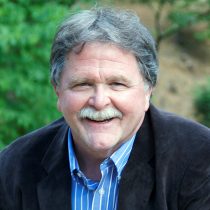
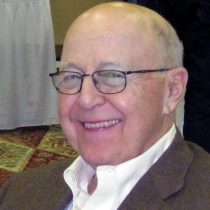
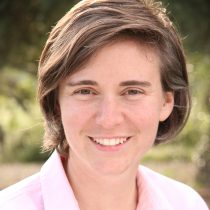
“HMI’s Certified Educator Training Program has had a huge impact on many aspects of my life including helping me survive some major family and business crises. It has helped me learn Holistic Management at a far deeper level than I had known before, but it also brought me contact with and support from a whole community of like-minded people who continue to shape and support my learning path—an outcome that is priceless. Being a Certified Educator has also enabled me to help the many good farmers and ranchers I worked with to realize that they have the power and the means to heal degraded land and to work together more effectively as families and make their businesses thrive.”
Wayne Knight, Interim Executive Director HMI, Consultant, and Rancher
Texas, USA
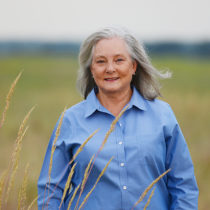
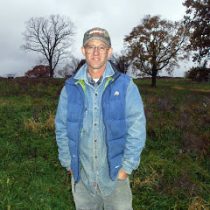
“The Certified Educator Training Program was a great educational step for me. At the time I was considering some major changes in my career, but didn’t know what it would look like. The program not only gave me the tools I needed to make that decision, but also gave me the training I needed to go in a number of different directions, teaching, consulting, ranching, facilitating, etc. Another key benefit of the program was the mentorship from existing Certified Educators and networking with new/potential Certified Educators as well as the experience to travel and teach in a variety of environments. The program also helped me build confidence, and provided a platform to help people, gain a much deeper understanding of the land and its function, and gain additional friends and mentors that have helped immensely with our own ranch management and consulting/teaching/facilitation business. It gave me opportunities to be thrown into the fire, but with a safety net. I felt more prepared to do the things a Certified Educator needs to be able to do (communicate, facilitate, teach, speak, etc.) because the program actually had me do those things firsthand.“
Joshua Dukart, Seek First Ranch and Consultant
North Dakota, USA
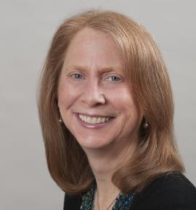
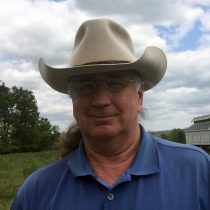
“I have discovered hidden talents and abilities I never knew before. The Savory Center’s [HMI’s] Certified Educator Training Program covered its costs for me in the first year I was certified. It’s the best investment I have ever made in my life!”
Dick Richardson, Consultant at Grazing Naturally and Nature’s Equity
Mount Pleasant, Australia
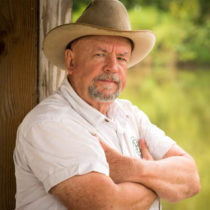
“Everyone I talk to who practices Holistic Management sees it as a life-changing experience. I feel that this is true on their farms, but also in their lives and families. It has been a life-changing experience for me. HMI’s Whole Farm/Ranch Trainer training has been wonderful, and I’ve met so many great people, being a part of this.”
Ashley Pierce, Cornell Cooperative Extension Albany County
New York, USA
“HMI’s Certified Educator Training Program totally changed the way I interacted with farmers. The first question I ask now is ‘What are your goals?’ And then I listen. In the past, I would have given information. Now I ask good questions. Holistic Management has given me so much and I’m so grateful. That’s why I train others. Others have given me encouragement and it feels good to be an instructor and leader in the Holistic Management community, particularly as a woman.”
Elizabeth Marks, USDA-NRCS Biologist
New York, USA
“I liked the way the program is structured. The learning plan puts the Certified Educator trainee in the driver’s seat. I had to work through all the modules while facilitating and teaching each one of them. This structure guaranteed the high quality of the program. The monthly webinar and mentor meetings gave the minimum support needed to get through challenges and stay motivated while providing me with a great social network to stay in touch with. Especially I liked how on point the Education Director answered any question that was ask from her. Was it in the webinars, via mail or ZOOM call, she was always ready to offer a helping hand. Thanks to HMI for the opportunity to be part of such a great organization!”
Philipp Mayer, Farmer and Consultant
Pirkanmaa, Finland
“Twenty years ago I enrolled in HMI’s Certified Educator Training Program two-year program. I was fully aware of the cost and commitment from the outset and made the decision to enroll only when I knew I had the time and financial resources to complete the program. With almost every activity in life– you take as much benefit or gain commensurate with the amount of effort put in. I consider that the first holistic financial plan I prepared was responsible for recouping the financial ‘cost’ of the Certified Educator Training Program. In terms of added value, the lessons from the program have had far more than simply financial ‘value’ on all aspects of my personal and professional career.”
Judi Earl, Consultant
Coolatai, Australia
“The Holistic Management training ended up having a profound effect on my job and how I approached it. I better understood what motivates people to do conservation. Since then I’ve always tried to be a service provider leading with Holistic Management. The training improved my ability to communicate with landowners in determining how best to help them. It also helped me become more valuable to my own and other organizations in planning and implementing programs. I learned how to take off my so- called “expert” hat and instead was better able to facilitate discussions with farmers on how they wanted their lives to be and how they could more effectively move toward that. One impact I didn’t anticipate was how the training changed my personal life, and how it improved our family’s decision making, including finances. The network of other trainees and Certified Educators had a huge benefit. They helped me process a lot of information, much of it new and some of it forcing paradigm shifts to be able to see a more effective way of assisting farms and organizations.”
Phil Metzger, Retired USDA – NRCS Conservationist
New York, USA
“My husband and I searched for land that would allow for a return to our roots in agriculture and for us to retire to the country. We wanted to restore the land and bring back the native grasses using holistic practices. In searching for answers on how to begin we stumbled on Holistic Management. The holistic approach resonated deeply with me as I had spent the past 20 years as a Montessori teacher. I applied to the HMI Texas Beginning Women Farmers and Ranchers Program and began implementing Holistic Management. We saw success not only on our land where we saw the building of soil and increase in ground cover and diversity, but we also learned to balance the working of the land with relaxation in our personal lives. I decided to apply to the Certified Educator Training Program in 2013 because it would increase my knowledge of Holistic Management, allow me to share my experiences with others who were seeking ways to restore their land, and help facilitate their journey into sustainable land management. Upon completion of the Certified Educator Training Program I have had the opportunity to deepen my understanding of Holistic Management through practicing, working with other ranchers on different landscapes, mentoring others as they work towards certification and it’s given opportunities for sharing and brainstorming with other educators regarding challenges seen in environments and training. The continuing education that the Certified Educator Training Program offers allowed for me to gain skills that increased my effectiveness as an educator, learning techniques in effective listening and consensus building, not only in my personal life but also assisting others in conflict resolution. I am both honored and grateful to be a part of this program. “
Tracy Litle, Owner Faith Hollow Farm
Texas, USA



 Seth Wilner has been a Holistic Management International Certified Educator since 2005. For 22 years he has worked as an agent educator with University of New Hampshire Cooperative Extension where he specializes in farm business management with an emphasis on whole farm planning.
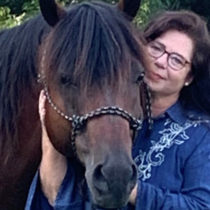 Dana was first introduced to Holistic Management in the 1990s while working in the Texas Hill Country. She strongly believes that Holistic Management can positively impact families that are on the land, the communities they are a part of, and larger landscape resource regeneration efforts.
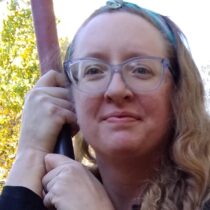 Sarah Robertson grew up in Taos, New Mexico and has always been passionate about land stewardship, growing things, and nurturing others. After completing a BA in Communication from the University of New Mexico and working with local non-profits, she started her journey as a first-generation farmer. Since 2015, she has been learning and growing alongside her husband on various leased properties in Albuquerque, NM and running a small market farm with goats, chickens, and a CSA. In her role as Programs Assistant at HMI, Sarah brings her enthusiasm for regenerative agriculture, devotion to supporting others, and drive for lifelong learning and growing.
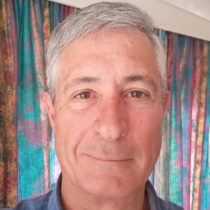 Jozua Lambrecht is from South Africa and divides his time between their home in Somerset West and their family farm in Sutherland, one of the coldest places in South Africa, where they farm with sheep. He is married to his wife Therese and they have two daughters.
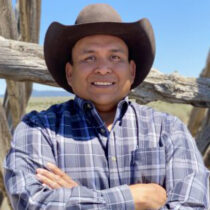
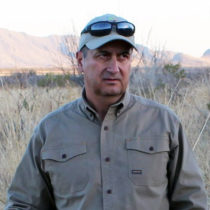 Alejandro Carrillo is a fourth-generation rancher, and he is quite familiar with the challenges of running a profitable cattle ranch in the Chihuahuan desert. Because annual precipitation seldom exceeds nine inches, every drop counts when it comes to growing more grasses. Grazing year-round with only sea salt as an input, he is not willing to waste any water in such a brittle environment.
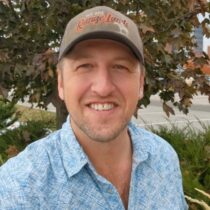 Jared L Talley was born and raised in Southwestern Idaho and now seeks to help rural communities adapt and thrive in a rapidly changing world. He is an Assistant Professor in the School of Public Service at Boise State University, earning his PhD in Philosophy from Michigan State University and his MPA in Environmental Policy and Natural Resource Management from Boise State University. An environmental philosopher by training and an interdisciplinary scholar in practice, he seeks to better understand how communities relate to the land and how this relationship poses obstacles and opportunities for collaboration and governance. In doing so, he studies the role of science in collaborative policy, the role of place in environmental identity, and the role of the imagination in mediating both. Specifically, he studies grazing management and public land permitting, community-led conservation programs, rural education and entrepreneurship, place-based environmental governance, and the imaginative experience of our natural and built environments — all in the contexts of the intermountain American West.
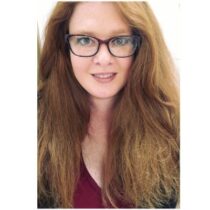 Adelene is a native of Arkansas and loves exploring the state’s natural trails. Her passion for education and technology led her to earn a master’s in learning systems technology from the University of Arkansas at Little Rock. With her professional experience managing student/client databases and instructional design, Adelene will bring skill and understanding to her role as Office Manager & Instructional Designer at HMI. Her focus on making education more accessible to diverse communities is evident through her volunteer work as an executive director for a scholarship program and as a member of the student affairs committee. Adelene is devoted to creating educational opportunities that align with HMI’s mission to promote healthy, resilient lands and thriving communities.